
Emily Paterson
Learning Experience Designer
100 Years of WKAR: Curating and Designing an Exhibition
Duration: January-April 2023
Overview: An exhibition created to mark a centennial celebration for a beloved mid-Michigan broadcasting station.

Background:
During the spring semester of my junior year, I was a part of a museum studies course that guided students in the curation and design of an exhibition at the MSU Museum to commemorate WKAR Public Media’s 100 year anniversary.
On display from April to November, the exhibition “WKAR’s Legacy of Innovation” centered on the key role that students and other community members played in bringing WKAR’s programming and technological innovation to life.
Audience & Challenge:
With an exhibition taking place on campus, we knew that our audience would be primarily composed of students, faculty, alumni, and broader Lansing residents. Despite sharing a common tie to the university, our audience would widely range in knowledge of WKAR; some visitors may have grown up listening to the radio station, while others may be learning about it for the first time. With that in mind, we wanted to balance the more universal-type experiences (ex: watching Sesame Street growing up) with the local broadcasting that shaped the voice of the station.
Goal:
Through curated objects and experiences, we aimed to develop an exhibition that showcased a century of WKAR’s hard-working staff and students who, through a culture of innovation, developed a platform that supports the local community and beyond.
Ideation:
From educational programming to sports broadcasting, WKAR has cultivated a diverse and varied history over the past 100 years. Very early on in the brainstorming process, our class talked about whether we wanted to craft a narrative that was chronological or thematic. Based on an initial survey of visitors interests about WKAR, we decided upon a mainly thematic order with some slight chronological components. Our themes centered on:
- Education: Then & Now
- Early Sports Broadcasting
- Arts, Music, and Performance
- Past Broadcasting Technology
- Community Voices & Impact
- The Future of Media
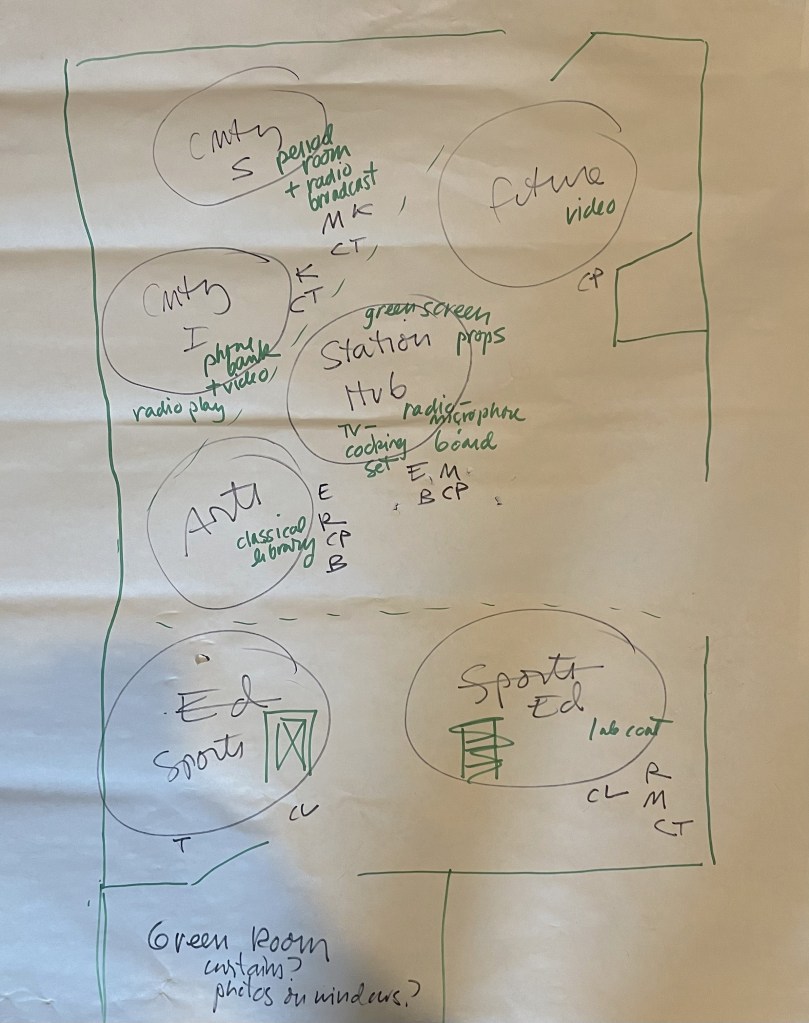
Once we had completed the preliminary brainstorming as a class, we broke out into smaller student groups. I became the team lead for our Community Voices & Impact section, which aimed to showcase the diverse voices that shaped WKAR’s programming and the larger impact the station had on the community. Our section was divided into two main parts: a vintage 1950s period room and a timeline of diverse voices.
1950s Period Room:
With this community-centered focus, our team knew we wanted to draw from the university’s collections to furnish a small period room, aiming to capture visitors in experiencing what it was like when television first started being broadcast on air.
Furnishing even a small room was no easy task! A majority of the university collections objects were significantly older than the 1950s, which meant we had to get creative with our choices. Our room ended up containing an eclectic set of objects spanning across the 1920-50s, including a 1930s “Rodeo Joe” tin toy and a 1920s automatic electric telephone.
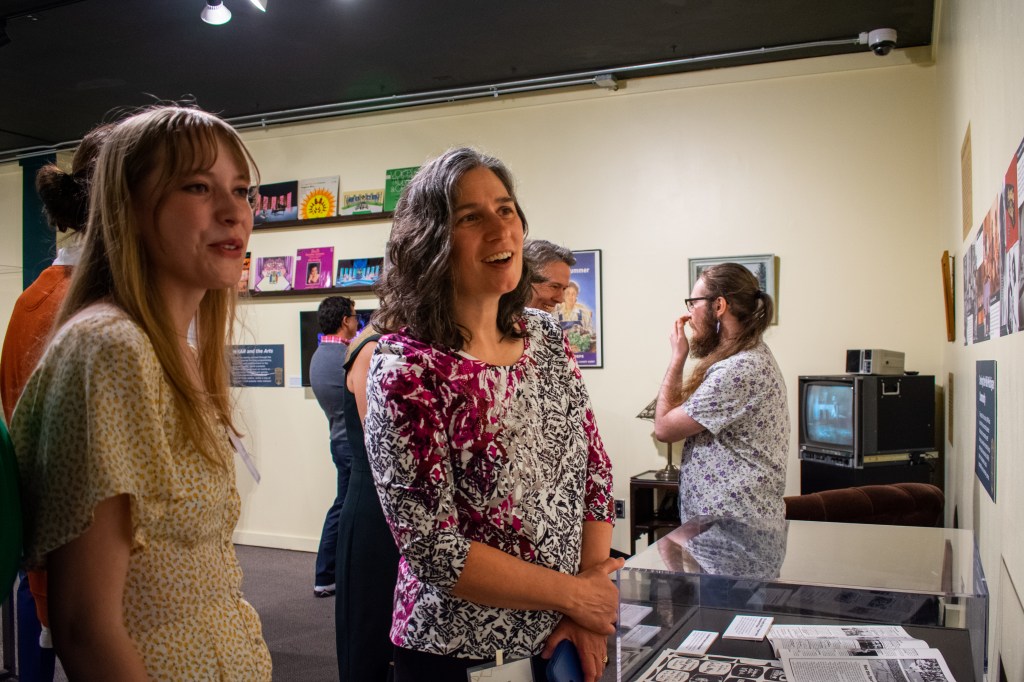
Thankfully, our sources at WKAR provided us with a vintage television set, which cycled through a number of clips from early 1950s news broadcasts and TV shows. During the week of the exhibition set-up, I staged the objects, hanging artwork onto walls and arranging the furniture layout.

Timeline of Diverse Voices:
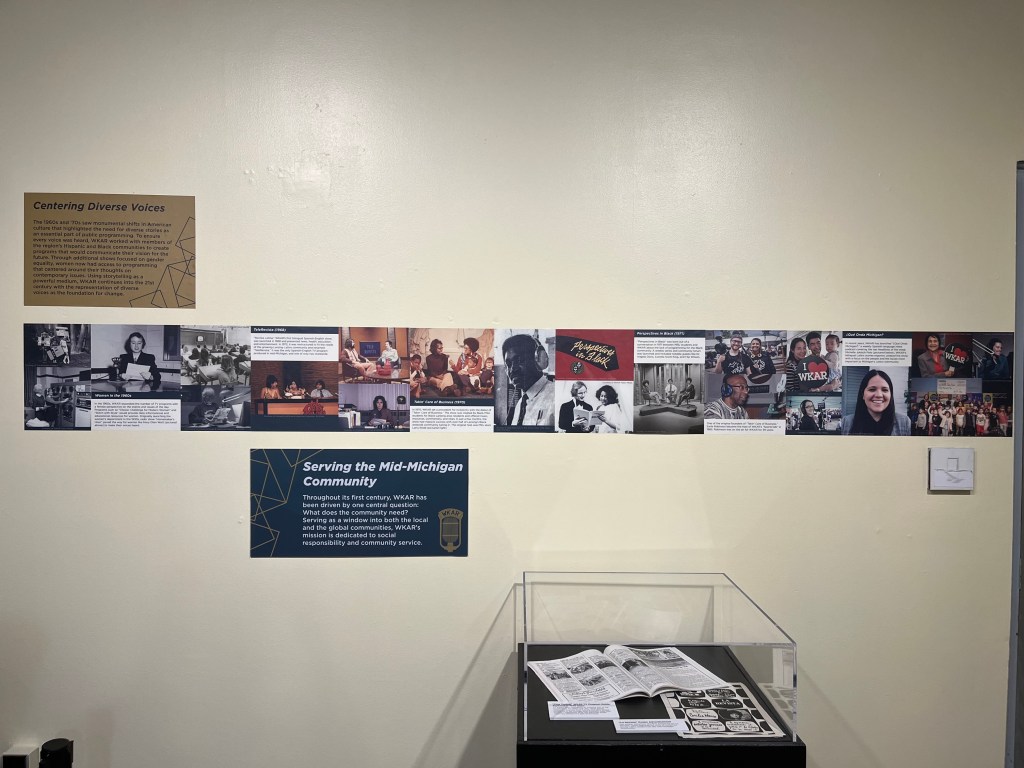
Instead of physical objects, we mostly had archival photographs of WKAR programming that highlighted the trailblazing endeavors of female, Black, and Hispanic broadcasters. This presented us with a unique design challenge—how could we represent their stories without physical objects?
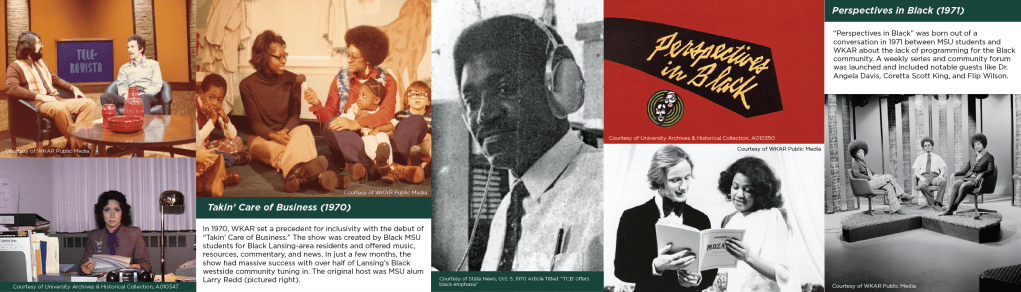
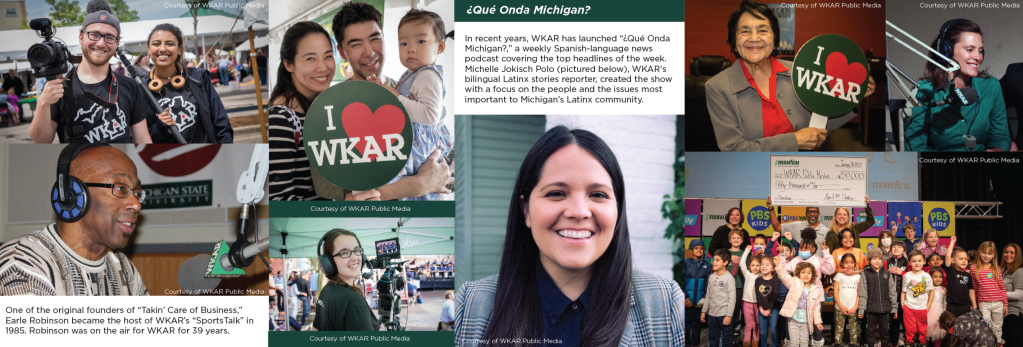
Sifting through a number of archival images, we decided to collect and feature the stories in a visual timeline, chronicling the 1960s to the present day. Several of the shows, including TeleRevista (1968) and Takin’ Care of Business (1970), were difficult to find information about. This exemplified the importance of highlighting these foundational voices that history does not often remember.
Working with my team members to write the contents of exhibition labels, I assembled all of the images and arranged them together in a giant collaged timeline on Adobe Illustrator. Greatly limited by less than 10 feet of wall space, it was a balancing act to fit all of the words and images into a cohesive blend of visuals spanning across sixty years.

Impact:
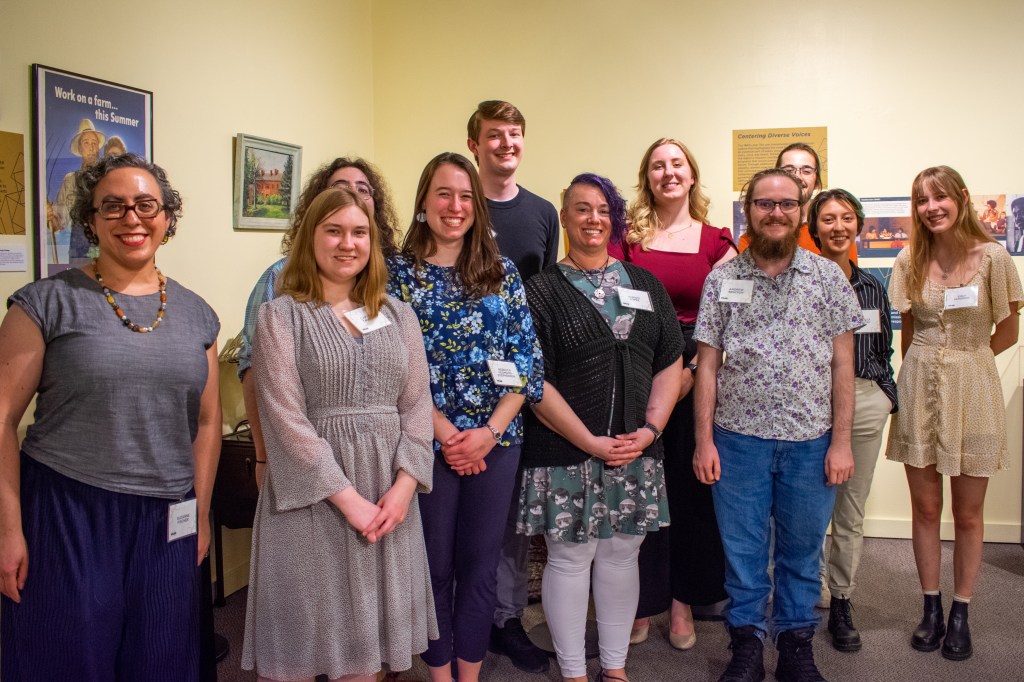
With an opening ceremony for the exhibition held at the end of April, our class had the opportunity to present our work to a number of campus stakeholders, including past and present staff at WKAR. We were overwhelmed by the positive reception; many community members expressed to us the pride that it made them feel about the station.
As a student who worked for WKAR my entire sophomore year, the exhibition had an incredibly personal impact on me, allowing me to blend my love of public media and museums! It was also such a unique challenge for me to embark beyond my digital-based design studies into the physical world, exploring what visitors will see, hear and feel.
Emily Paterson
Learning Experience Designer
Send me an email at
emilyypatersonn[@]gmail.com
 Emily Paterson